Hobonichi, notebook, or rings?

For us in the planner community, this is an exciting time, yet it is overwhelming too.  I’ve planned since high school.  For the majority of my life this occurred in a Franklin Covey compact, then the years of the Palm Pilot I went digital.  Now after my Palm Pilot crashed and I had to call to retrieve all my appointments, I haven’t been solely digital since.  Now I realize today we have the cloud and things happen magically.  However, I share the calendars with my husband and he has a way of deleting things that don’t pertain to him.  My paper planners, just me.  Besides, the act of writing down what I need to do and reading what I need to do helps me get things done (even if I don’t physically mark them off).

About five years ago I moved from a ring planner to an Erin Condren.  The Life Planner is an amazing planner and I loved it, but it just wasn’t me.  It was too big, I couldn’t really add to it, and I didn’t like the layout.  That is when my time feeling lost in planning began.  Since then, I’ve wanted a permanent home, like I had with my Franklin Covey (darn you “shiny object syndrome”). What I learned using the Erin Condren, I hate rings!  At least I hate writing in rings.  When it comes to reference and viewing, rings are my preferred way of doing things.  So, the elusive journey for “planner peace” continues.

Here is what I learned, and I’ve heard Carie Harling and MissVickybee state the same information.  I have a system that works.  I can do it on a napkin, in a binder, in a notebook, in a bound book.  What really matters is I write everything down and read everything.  While this is common sense, this is a line from Anne Ortlund’s book “The Disciplines of a Beautiful Woman” that really stuck with me.  When I forget to do things, or I just don’t do them, it is because I didn’t write it down, and/or I didn’t read it.
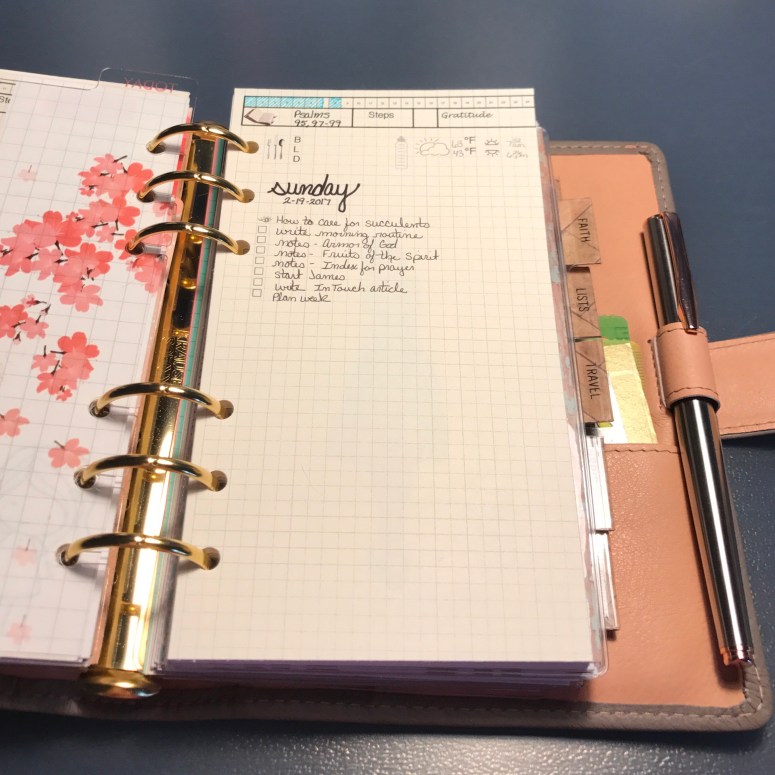
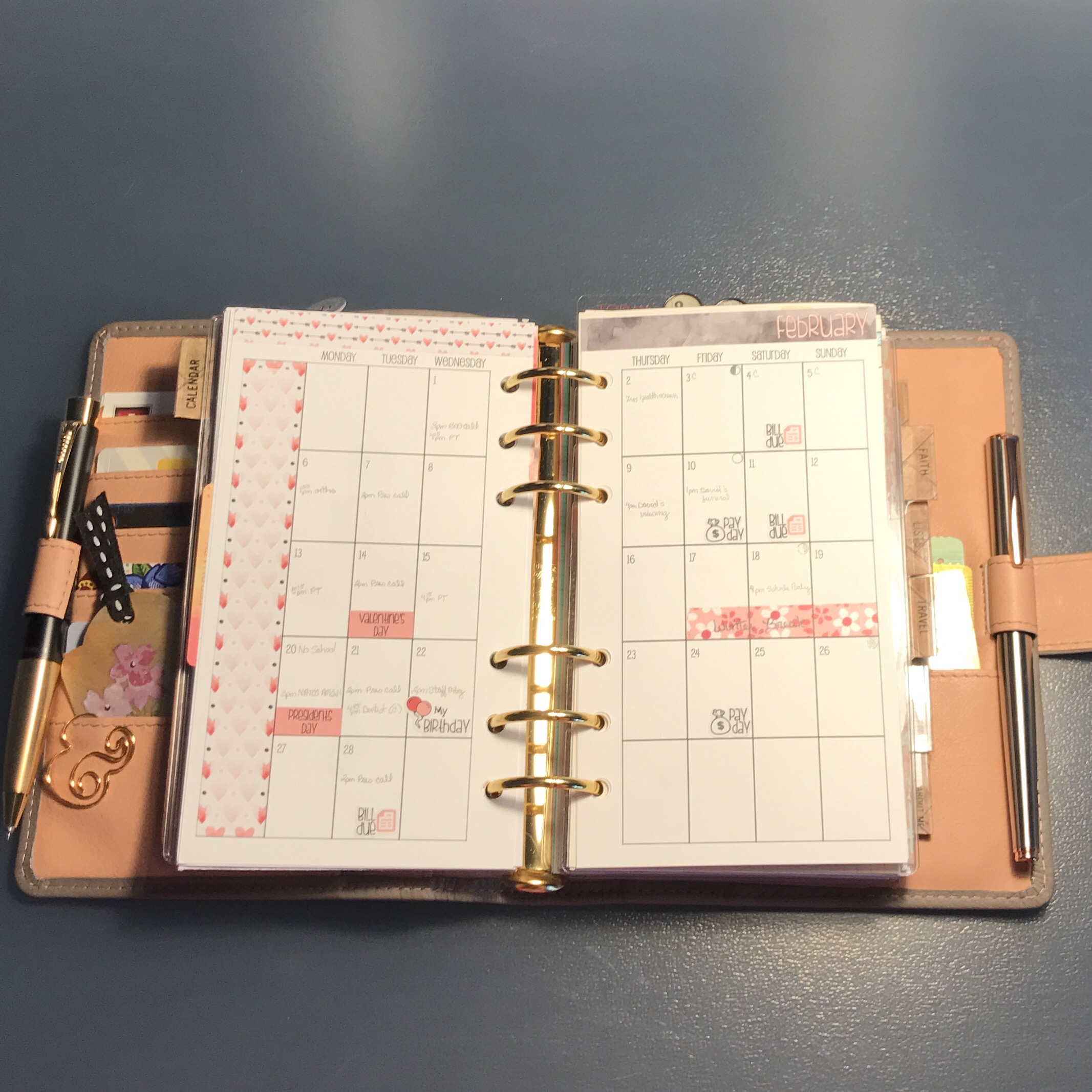
My journey has come to three paths.  Last year I had a different “planner” every 3-4 weeks.  What I learned to hate is duplication!  Duplication is my nemesis.  So, listening to the advice of the brilliant ladies (and gents) in the planner community, have ONE calendar.  Okay, that is common sense too!  Why am I making this so hard!  So I decided that my personal size ring binder would be “Home Base”.  This would house my monthly calendar, references for goals and planning, and has the ability to change as my needs change.  By selecting “Home Base”, I can change planners weekly if I want.  I can use a #2 FoxyFix this week, my Hobonichi next week, and be back in rings the following.  This can be done with little duplication.
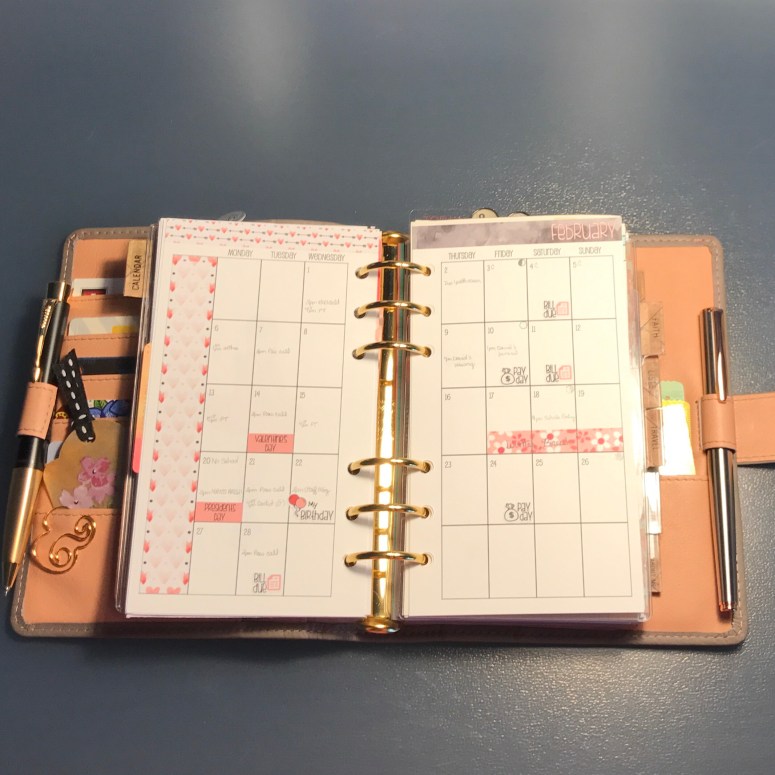
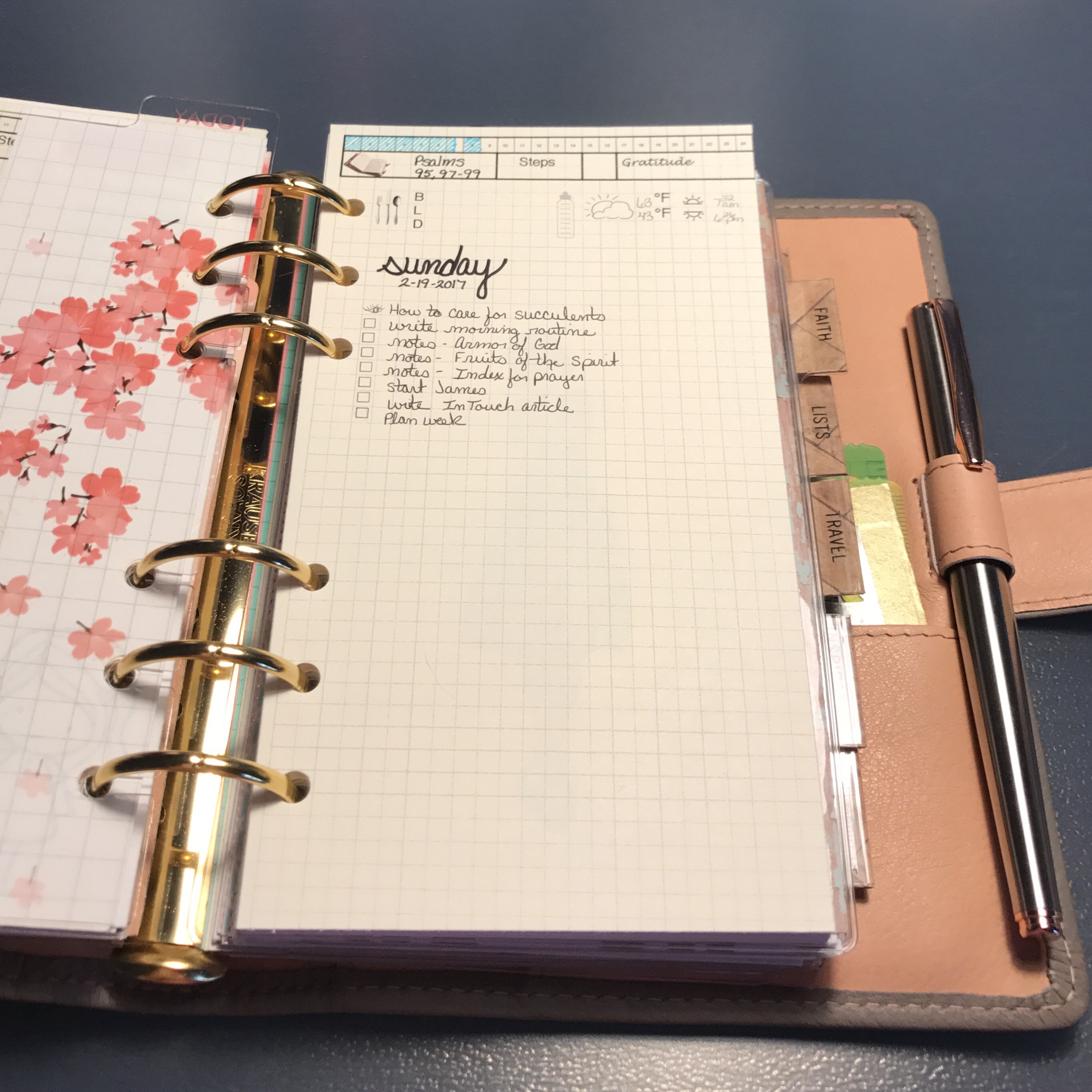
Van der Spek standard with Sew Much Crafting inserts

So, using the one calendar concept, whether I chose to use a monthly book, my Hobo, or rings, I only copy and duplicate the month.  That is way less overwhelming than trying to copy days and weeks (unfortunately I have an issue with incompleteness).  Also, I am less likely to let something drop through the cracks because I know where my official calendar is located.  It is with me most days, though it may not go into stores and other facilities with me.
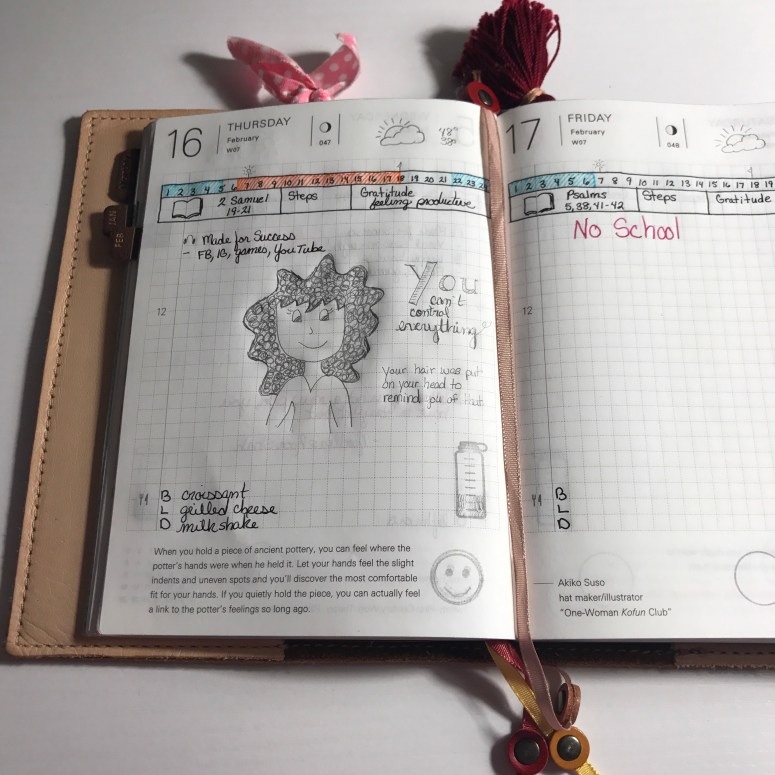
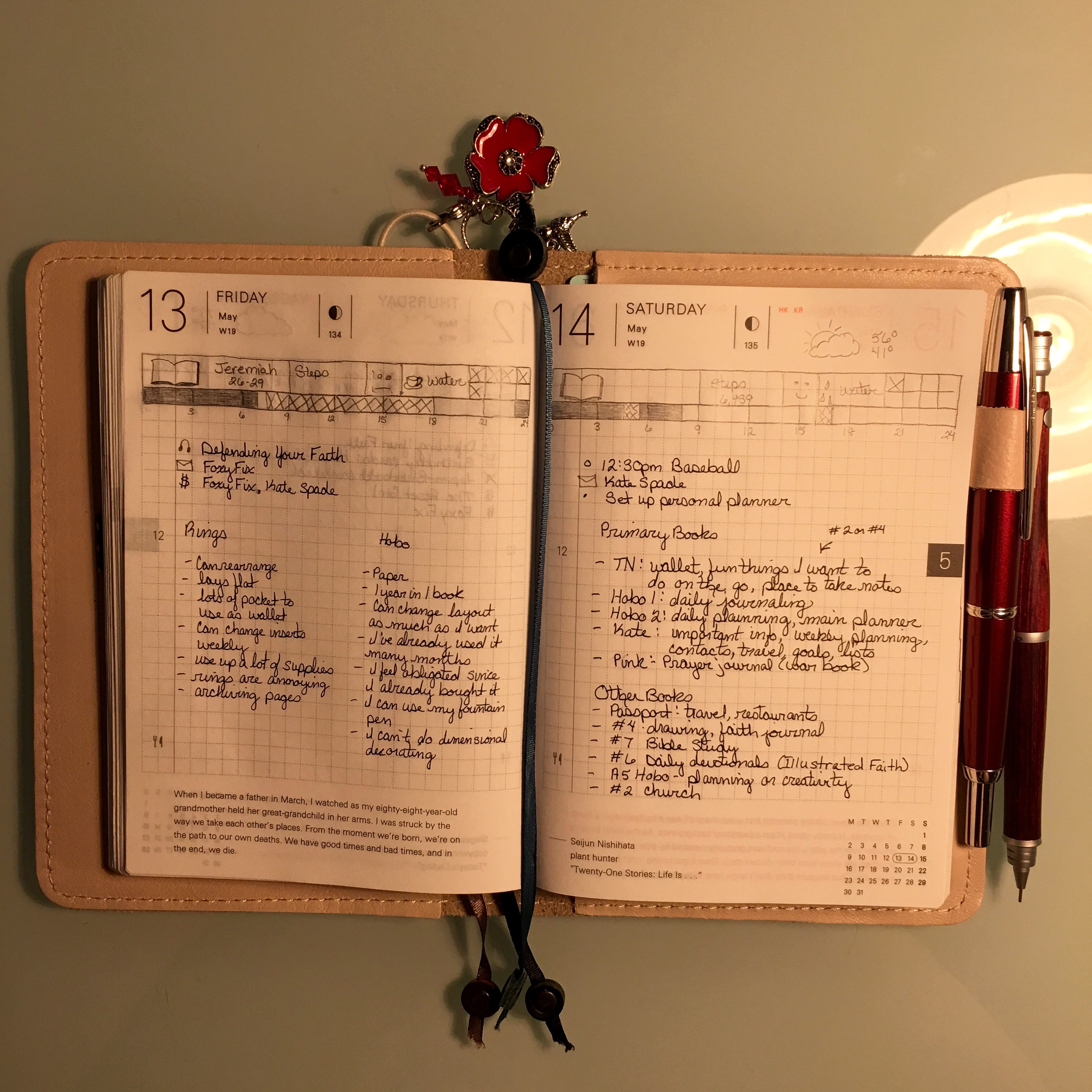
Hobonichi Planner

This method is working.  It also allows me to change as my tastes change without the guilt of not using (or under using) planners.  If you haven’t seen the VeganOrganizer’s video about this, I do recommend it.  Future posts I will share my struggle between my Hobonichi and rings (and why the notebooks have been out of the running).  I will also share what and how I duplicate, and why.  I will also do a post on how I am using the Jibun Techo mini.  Then I think I will do a post on paper vs. digital planning for me.  While I think planning is a highly personal decision, I think it helps to read and hear the thoughts of others, so you can recognize your own thoughts.

Download of insert I created:  bujo-personal-graph

One Book July 2016

After much thought, I’ve decided to participate in #onebookjuly2016

FoxyFix Sienna, Darling, Rowena 2.0


I came to this decision because I’ve gone back to a notebook for my everyday everything. My Hobonichi planner is still in use (but has become too precious to carry always). So I have my notebook with me at all times. In the last six weeks I’ve used a pocket, personal, wide, and A5. There are advantages and disadvantages to each size.I’m happy to expand on this idea, however I feel the size of notebook is such a personal decision. 
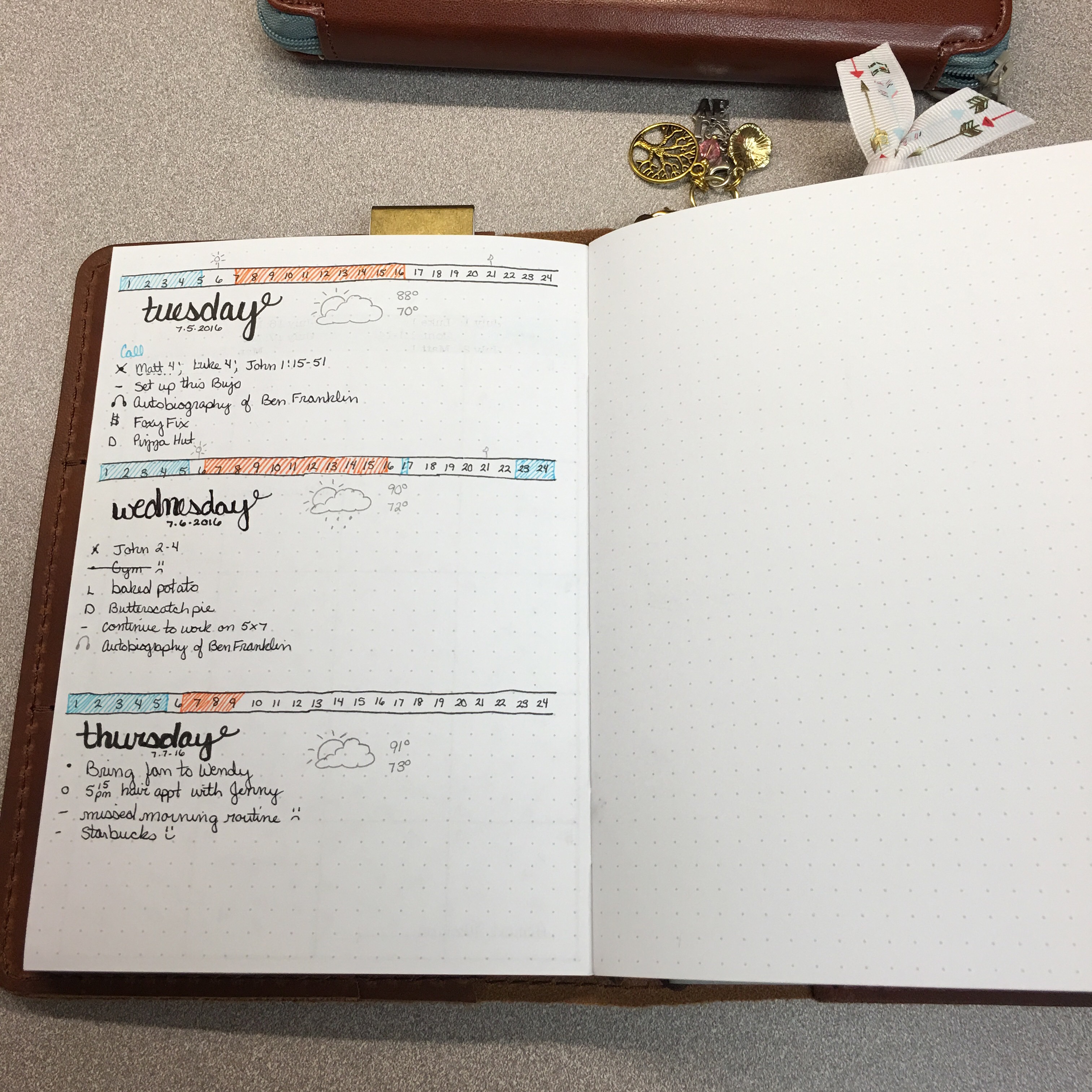
Why did I decide to give #onebookjuly2016 a try?  I’m traveling at the end of this month and I wasn’t about to take 4-6 books with me. So I am using a Foxy Notebook 5×7 as a bullet journal. While I love the Planner Perfect Method by Jenny Penton, the Bujo meets my needs in a smaller space and it is easier to switch notebooks as my tastes and needs change. What is beautiful about the Planner Perfect Method, the theory sticks, regardless of how you do your planning. Every task, every event is about designing a life you will love. 

Sojourner trifold in seed


I LOVE my pocket traveler’s notebook. This size really meets my needs and is just so portable. While I am challenging myself to use one book, I will still carry my pocket TN because I would miss her if I didn’t.  

So, for #onebookjuly2016, I am using my 5×7 Foxy Notebook. While the cover may change, I plan to keep my setup the same. Later I will give details of my layout. 

Today’s layout


I adore my Hobo and I feel so much of me is in it. I love having the option to change that the FN provides. So we will see, can I use just one (two) books. 

Note, since my Hobo will not be with me always, I plan to reconcile it on Sunday’s. Next year I plan to get another Hobonichi Planner, though I plan to do more of a journaling approach to the planning. So my Hobo will likely not be carried. What is beautiful, my planning system fits wonderfully in both vessels. I will write a post about my system once I feel I can communicate it effectively. 

Common Sizes of Traveler’s Notebooks

As I said in my last post I belong to several groups on Facebook.  These groups are a great source of inspiration, community of interests, and information.  One thing I have noticed in many of traveler’s notebook groups is people asking for comparable sizes.  Now it is important that what one maker may call a wide another maker may call extra wide. It is important to read the descriptions of the products before purchase.   This is a short post on some of the sizes, common terms, and abbreviations about traveler’s notebooks.

Sizes

Common Sizes

1. A5 (5.5×8.25)–May books, Moleskine large, Hobonichi Cousin
2. Standard (4.33×8.5)–Midori regular, Moleskine Chapters large
3. Personal size (3.75×6.75)–Le Petit (Foxy Fix), Moleskine Chapters medium (see note)
4. A6 (~4×6)–Hobonichi
5. Pocket (3.5×5.5)–Field Notes, Moleskine Pocket
6. Passport (3.5×5)–Midori passport, Scout books

*Note–while the Moleskine Chapters medium will fit in a personal size notebook, they are 3.75×7, so they are taller than most personal size  inserts.

Terms and Abbreviations

There are some common terms and abbreviations you will see throughout the traveler’s notebook communities.  This is not an exhaustive list, but if you are new to the world of traveler’s notebooks, hopefully this will help.

Midori–Midori is a maker of traveler’s notebooks and they are the company that set of the recent rage about this amazing product.  While the concept has been around a long time, its popularity has exploded in the recent past thanks to the Midori Traveler’s Notebook (MTN).  Midori has changed their name to Traveler’s Company.  They continue to offer a variety of products and traveler’s notebooks in two sizes.

Cahier–Cahier is not a size, it is a style of notebook (see Webster’s definition below).  Sometimes it is used interchangeably for A5 notebooks, but not all A5 notebooks are cahier and not all cahier notebooks are A5.  Moleskine offers their cahier notebooks in three sizes: XL, large, and pocket .

Ca`hier´ Pronunciation: kå`yã´ or kå`hēr
n. 1. A number of sheets of paper put loosely together; esp. one of the successive portions of a work printed in numbers.
2. A memorial of a body; a report of legislative proceedings, etc.

–dori–This is a traveler’s notebook made by someone other than the Traveler’s Company.  It is a play on the name Midori.

Every Day Carry (EDC)–EDC is the traveler’s notebook or planner that you carry with you always.  Often it includes your wallet, but this is not essential.

Traveler’s Notebook (TN)–A traveler’s notebook is a cover with straps to hold notebooks and inserts.  Traveler’s notebooks can be very versatile and the options for use are endless.

Until next time, have a beautiful week!

Danyel